Are insulated tools required for EV repair?
Yes — insulated tools are strongly recommended and are often required when servicing electric vehicles (EVs), hybrid vehicles, and high-voltage battery systems.
Modern EV battery packs commonly operate between 400V and 800V, with some systems exceeding those levels. Accidental contact with energized components can result in severe electric shock, arc flash injury, equipment damage, or even death. Because of these risks, technicians working on or near energized high-voltage systems should use properly rated insulated tools designed specifically for electrical safety applications.
Most professional EV manufacturers, industrial safety programs, and electrical safety standards reference the use of 1000V insulated tools that meet recognized standards such as:
- IEC 60900
- ASTM F1505
- NFPA 70E safety practices
- OSHA electrical safety guidelines
Proper insulated tools help:
- Reduce the risk of accidental short circuits
- Protect technicians from electrical shock
- Prevent arc flash incidents
- Safely access confined battery compartments and energized components
- Meet workplace and manufacturer safety requirements
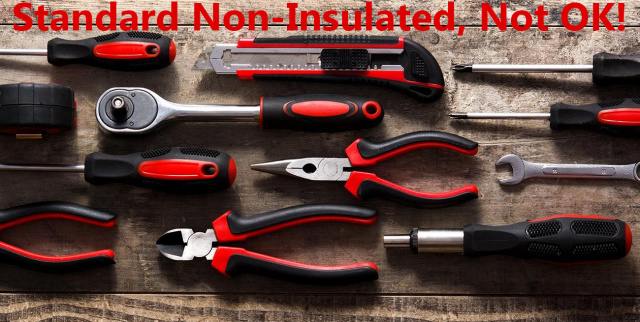 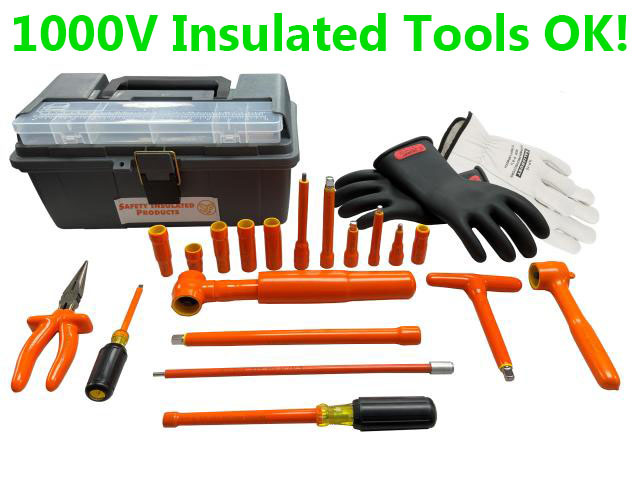
It is important to understand that standard chrome hand tools are not designed for energized electrical environments. Even a brief accidental bridge between terminals inside an EV battery pack can create catastrophic current flow capable of melting tools, damaging battery cells, or causing serious injury.
For maximum safety, insulated tools should always be:
- Clearly marked with a 1000V rating
- Individually tested
- Free from cracks, cuts, or damaged insulation
- Used alongside proper PPE and lockout/tagout procedures
As EV adoption continues to grow, insulated tools are becoming an essential part of professional automotive service and battery maintenance operations.
Why standard tools are dangerous around EV batteries.
Standard metal hand tools can be extremely dangerous around EV and hybrid battery systems because they provide no electrical insulation and can easily create accidental short circuits in high-voltage environments.
Modern EV battery packs commonly operate between 400V and 800V, while some advanced systems exceed those voltages. These battery systems are capable of delivering massive amounts of instantaneous current. Even brief accidental contact between energized terminals or conductive surfaces can create catastrophic electrical events.
A standard chrome wrench, ratchet, screwdriver, or socket can:
- Bridge positive and negative terminals
- Create a direct short circuit
- Trigger an arc flash
- Cause molten metal explosions
- Damage expensive battery systems
- Cause severe burns, shock, or death
Unlike insulated tools, standard tools are completely conductive. If a metal tool slips, drops, or contacts energized components in a confined battery compartment, the electrical current can travel directly through the tool.
In EV battery systems, this can happen in fractions of a second and may result in:
- Explosive sparks
- Extreme heat
- Vaporized metal
- Fire
- Battery thermal runaway
- Serious injury to technicians nearby
One of the biggest dangers is that EV battery systems may still contain stored energy even after the vehicle is powered down. Without proper verification and lockout procedures, energized components may still be present.
1000V insulated tools are specifically designed to help reduce these risks by:
- Covering conductive metal surfaces with protective insulation
- Reducing accidental contact with energized parts
- Helping prevent unintended short circuits
- Improving technician safety in tight battery compartments
However, insulated tools are only one part of proper EV electrical safety. Safe work practices should also include:
- High-voltage safety training
- PPE and arc-rated protection
- Lockout/tagout procedures
- Voltage verification
- Manufacturer service procedures
As EV adoption continues to grow, using standard non-insulated tools around high-voltage battery systems is increasingly recognized as a major safety hazard in professional service environments.
What makes a tool truly 1000V rated?
A tool is considered truly 1000V rated when it has been specifically engineered, insulated, tested, and certified for safe use around energized electrical systems up to 1000 volts AC (and typically 1500 volts DC) according to recognized safety standards such as IEC 60900 or ASTM F1505.
A genuine 1000V insulated tool is much more than a standard hand tool with a colored coating or rubber grip. Professional insulated tools are designed from the ground up for electrical safety applications and undergo strict manufacturing and testing procedures to verify their protective performance.
True 1000V rated tools typically include:
- Multi-layer insulation designed to isolate the user from conductive metal surfaces
- High dielectric strength insulation materials
- Individual high-voltage testing during manufacturing
- Clearly marked voltage ratings and certification information
- Compliance with recognized safety standards such as IEC 60900 and/or ASTM F1505
Professional insulated tools are commonly tested at voltages far higher than their working rating during certification. This helps confirm the insulation can withstand electrical stress and maintain integrity under demanding conditions.
A properly certified 1000V tool is also evaluated for:
- Impact resistance
- Flame resistance
- Insulation adhesion
- Cold temperature performance
- Mechanical durability
- Resistance to cracking and wear
Many high-quality insulated tools use a two-layer insulation design. The outer layer is typically a bright safety color, while the inner layer is a contrasting color beneath it. If the outer insulation becomes damaged, the inner layer becomes visible, helping users quickly identify unsafe tools that should be removed from service.
It is important to understand that not every tool labeled “insulated” is truly 1000V rated. Some tools may only have comfort grips or non-certified coatings that provide no meaningful electrical protection.
When selecting insulated tools for EV repair, industrial maintenance, or electrical work, technicians should verify that the tool:
- Clearly displays a 1000V rating
- References IEC 60900 and/or ASTM F1505 compliance
- Comes from a reputable manufacturer
- Is individually tested
- Shows no signs of insulation damage
Using properly certified 1000V tools helps reduce the risk of electrical shock, arc flash, and accidental short circuits when working around energized systems.
|